

Media
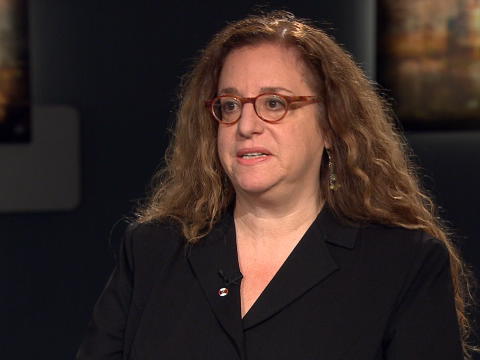
Marla Sokolowski: The Biology of Childhood Hardship
Marla Sokolowski of the Canadian Institute for Advanced Research explores how the hardships that some children face, including poverty, poor nutrition or neglect, can lead to biological changes that make them more susceptible to health problems - changes that they may then pass along to their own kids.
Part 7. OBI/CIFAR Public Lecture on Autism, Presented by Autism Speaks
Dr. Marla Sokolowski, Co-Director, Child and Brain Development Program for the Canadian Institute for Advanced Research, presents.
The genes that built a home
National Geographic, January 16, 2013Online
URL: http://phenomena.nationalgeographic.com/2013/01/16/genetics-burrowing/
“It’s great work. There are very few other examples of genes for naturally occurring variation in behaviour,” says Marla Sokolowski, who has found a few in fruit flies ...
Social Interactions Can Alter Gene Expression In Brain, And Vice Versa
Science Daily, November 7, 2008Online
URL: https://www.sciencedaily.com/releases/2008/11/081106153538.htm
One such gene, called for (for foraging), was originally discovered in fruit flies by Marla Sokolowski at the University of Toronto ...
Toward a new biology of social adversity
Published by Proceedings of the National Academy of Sciences
2012 With the advent of industrialization, the forcible employment of children, and the 19th century child labor laws that followed, a broad recognition emerged that even childhood (or perhaps especially childhood) can be “broken” by the adversities of life in a harshly exploitative society.
URL: http://www.pnas.org/content/109/Supplement_2/17143.short
The interplay of birth weight, dopamine receptor D4 gene (DRD4), and early maternal care in the prediction of disorganized attachment at 36 months of age
Published by Development and Psychopathology
2015 Disorganized attachment is an important early risk factor for socioemotional problems throughout childhood and into adulthood. Prevailing models of the etiology of disorganized attachment emphasize the role of highly dysfunctional parenting, to the exclusion of complex models examining the interplay of child and parental factors.
The biology of social adversity
Published by New Scientist
2013 Bad experiences in childhood may scar us – and our descendants – for life. Are we closing in on the biology behind the process?
URL: http://www.sciencedirect.com/science/article/pii/S0262407913602286
Genetic and Developmental Origins of Food Preferences and Obesity Risk: The Role of Dopamine
Published by Hormones, Intrauterine Health and Programming
2014 Fetal growth and development associates with poor lifetime health outcomes. Despite the strength of the epidemiological evidence, there is little research that describes the functional pathways linking fetal development to brain-based disorders and metabolic health.
URL: http://link.springer.com/chapter/10.1007%2F978-3-319-02591-9_11
Genetic Differential Susceptibility to Socioeconomic Status and Childhood Obesogenic Behavior
Published by JAMA Pediatrics
2016 Genes may work by modulating the way individuals respond to environmental variation, and these discrete and differential genes vs environmental interactions may not be readily captured in simple association studies.
URL: http://archpedi.jamanetwork.com/article.aspx?articleID=2484697
Biography
Marla B. Sokolowski's innovative work is esteemed worldwide as a clear, integrative mechanistic paragon of the manner in which genes can interact with the environment, thus impacting behaviour. She has trail-blazed the development of a branch of Behaviour Genetics that addresses the genetic and molecular bases of natural individual differences in behaviour and is best known for her discovery of the foraging gene. She has published well over 135 publications and given close to 200 invited lectures.
Sokolowski is an award winning teacher and highly accomplished lecturer. She has supervised over 20 postdoctoral fellows and 35 graduate students with many of her trainees ascending to prestigious national and international academic positions. She has received Distinguished Visiting Professorships in the US and Europe, where she contributes regularly to graduate education. Sokolowski became a Fellow of the Royal Society of Canada in 1998 for her pioneering work in the field of Behavioural Genetics and holds a Tier 1 Canada Research Chair in Genetics and Behavioural Neurology since 2001. In 2004, she became a Fellow of Massey College and in 2007 she received the Genetics Society of Canada’s Award of Excellence. She co-directs the Child and Brain Development Programme of the Canadian Institute for Advanced Research where she is the Weston Fellow. She was the Director of the Life Sciences Division of the Academy of Sciences of the Royal Society of Canada from 2009-2012. She was named a University Professor at University of Toronto in 2010 and was the Academic Director of the Fraser Mustard Institute for Human Development at University of Toronto from 2012 to 2014. In 2013 she was awarded the Queen Elizabeth Diamond Jubilee Medal.
Recognition/Reconnaissance
University Professor | Professional
University of Toronto
The Queen Elizabeth II Diamond Jubilee Medal | Personal
To honour significant contributions and achievements by Canadians
Canada Research Chair in Genetics and Behavioural Neurology | Professional
Canada Research Chairs Program
Award of Excellence | Professional
Genetics Society of Canada