
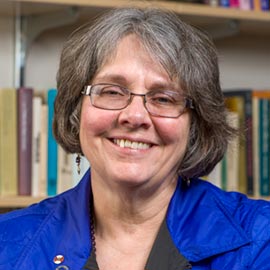
Rhoda Howard-Hassmann
Professor Emeritus, Dept. of Political Science, Canada Research Chair in International Human Rights 2003-16 and Fellow of the Royal Society of Canada, Wilfrid Laurier University
Universal human rights, Women’s rights, Political apologies, Religious persecution, Famine, Comparative genocide studies, Reparations
Media
Clashing rights: Behind the Québec hijab debate
The Conversation, May 26, 2019Online
URL: https://theconversation.com/clashing-rights-behind-the-quebec-hijab-debate-117711
The Coalition Avenir Québec (CAQ) government has introduced Bill 21, a law that would supposedly entrench religious neutrality in the province. It would do so by prohibiting providers of government services in positions of authority such as judges, police and teachers from wearing religious symbols, including hijabs (headscarves for female Muslims), turbans (for male Sikhs), kippas (skullcaps for male Jews) and visible Christian crosses.
Jehovah’s Witnesses: Neglected victims of persecution
The Conversation, March 24, 2019Online
URL: https://theconversation.com/jehovahs-witnesses-neglected-victims-of-persecution-114141
In February, a Russian court sentenced a Danish citizen who was a legal resident of Russia to six years in prison for such an extremist offence as organizing other Witnesses to shovel snow from their church’s property.
Forced sterilizations of Indigenous women: One more act of genocide
The Conversation, March 4, 2019Online
Last fall, a group of Indigenous women in the Canadian province of Saskatchewan brought a class-action suit against the Saskatoon Health Authority. They also sued the provincial and federal governments and some medical professionals.
Venezuela: Denial of food is a human rights crime
The Conversation, February 5, 2019Online
URL: https://theconversation.com/venezuela-denial-of-food-is-a-human-rights-crime-110832
In early February, the Lima Group, a coalition of several Latin American countries and Canada, urged the Venezuelan military to sever ties with President Nicolás Maduro. The group called for the urgent delivery of humanitarian aid and for international governments to refrain from doing business with the nation “in oil, gold and other assets.”
Seventy years of international human rights
The Conversation, December 10, 2018Online
URL: https://theconversation.com/seventy-years-of-international-human-rights-108446
It’s the 70th anniversary of the Universal Declaration of Human Rights, which was proclaimed by the United Nations General Assembly on Dec. 10, 1948. Since then an enormous body of international human rights law has been developed.
Canada’s genocide: The case of the Ahiarmiut
The Conversation, December 9, 2018Online
URL: https://theconversation.com/canadas-genocide-the-case-of-the-ahiarmiut-107272
As a human rights scholar, I have long argued that Canada committed cultural genocide against Indigenous peoples. But recently, I’ve come to conclude, in the case of the Ahiarmiut, that it’s not cultural genocide —it’s actual physical genocide.
Biography
Rhoda E. Howard-Hassmann is professor emeritus at Wilfrid Laurier University, Waterloo, Canada, where from 2013 to 2016, she held a Tier I Canada Research Chair in International Human Rights. She holds a Ph.D. in Sociology from McGill University (1976) and since 1993 is a Fellow of the Royal Society of Canada. In 2006, she was named the first Distinguished Scholar of Human Rights by the Human Rights Section, American Political Science Association. In 2014, she was named a Distinguished Scholar of Human Rights by the Human Rights Section of the International Studies Association. In 2013, she was awarded the Sir John William Dawson Medal for interdisciplinary research by the Royal Society of Canada. She worked in the Department of Sociology at McMaster University from 1976 to 2003, where she originated and directed McMaster’s undergraduate minor Theme School on International Justice and Human Rights (1993-99).
Howard-Hassmann is the author of Colonialism and Underdevelopment in Ghana (1978), Human Rights in Commonwealth Africa (1986), Human Rights and the Search for Community (1995), Compassionate Canadians: Civic Leaders Discuss Human Rights (2003), Reparations to Africa (2008), Can Globalization Promote Human Rights? (2010), State Food Crimes (2016), and In Defence of Universal Human Rights (2018). She is also co-editor of an International Handbook of Human Rights (1987); Economic Rights in Canada and the United States (2006); The Age of Apology: Facing up to the Past (2008); and The Human Right to Citizenship (2015). Compassionate Canadians was named 2004 Outstanding Book in Human Rights by the Human Rights Section, American Political Science Association; Economic Rights in Canada and the United States was named a notable book for 2008 by the United States Human Rights Network.
Howard-Hassmann was also a Senior Editor of the Encyclopedia of Human Rights (2010). She has published numerous articles and book chapters on various aspects of international and Canadian human rights.
From 1987 to 1992 Professor Howard-Hassmann was Editor or Co-Editor of the Canadian Journal of African Studies: she is currently a member of the editorial boards of several human rights journals. Dr. Howard-Hassmann conducted research in Ghana in 1974 and 1977. In August 1992, she was visiting scholar at the Institute for Social and Economic Research, Rhodes University, South Africa, and from July through December 2000 she was visiting scholar at the Netherlands Institute of Human Rights, University of Utrecht. She has been Marsha Lilien Gladstein Distinguished Visiting Professor of Human Rights at the University of Connecticut (2001); James Farmer Visiting Professor of Human Rights at University of Mary Washington in Fredericksburg, Virginia (2003); and Torgny Segerstedt Visiting Professor of Human Rights, University of Goteborg, Sweden (2005).