
Media
Lost in Space:Found in Place Film.m4v
This short film explores the relationships between place and self and history and future. Through an examination of creating a dwelling out of a space, this film attempts to capture the essence of Thoreau's Walden Pond in today's society. Compelling, thought-provoking, and aesthetic, this film challenges audiences to consider their own places in space, whether physically, spiritually, or otherwise.
The Study of Placelessness: Toward a Conceptual Framework
Published by College of the Atlantic MPhil Thesis
Abstract: I am placed. I am deeply embedded in a landscape and create this thesis from that sense of place. I know, however, that there are far more opportunities to disconnect from places or to have never formed connections to places than to connect. There is a trend toward the former affecting not only individuals, but also communities, and ultimately the natural landscape as well. Placelessness is a phenomenon that intrigues me and has provoked this work. In my thesis I initially discuss the sense of place itself, followed by studies of relationships to place, and then consider what affects the stewardship of places. These necessary foundations make it possible to define and examine the phenomenon of placelessness. The social sciences, within which many sense of place concepts are discussed, do not fully discuss an absence of place in the form of placelessness and are therefore largely absent from this study. Sense of place is, as a whole, a largely incoherent concept complicated by perception, interpretation, and subjectivity; to add the layer of placelessness to the concept further disperses ideas. Within this work I examine common foundations and applications of place as well as their current applications to the individual, community, and natural landscape. I suggest placelessness as the opposite of place but also recognize that it requires its own definition that is rooted in philosophy and psychology, but is also influenced by literature. I then contextualize placelessness in the present day in Canada and the United States and discuss emerging trends through the examination of case studies, including those of technology and stewardship. The conclusion provides a definition of placelessness that may be applied to the current trend and provides context for further study. I ultimately predict that stewardship cannot be achieved if individuals remain placeless.
URL: https://www.academia.edu/4293388/The_Study_of_Placelessness_Toward_a_Conceptual_Framework
Enduring Gardens: Woven by Friends into the Fabric of the Urban Community
Published by University of Waterloo PhD Dissertation
Public gardens can play an important role in fostering a sense of place in communities, in both historical and contemporary contexts. In this study, the impacts of such gardens are considered through Canadian experiences using perceptual lenses offered by diverse writers whose work can be found in bodies of literature related to history, geography, non-fiction, and poetry. Concepts such as ‘place-making’ which can foster ‘home-making’, for example, are intriguing and worthwhile areas of inquiry in understanding the role of public gardens in the urban landscape. This research explores the importance of ‘home’ in gardens. It also considers the importance of gardens to an individual’s internal (psychological) and external (social) home, particularly for those currently involved as volunteers at public gardens. The concept is related to stewardship and how being a steward of the garden home is key to being a steward of one’s internal home. The animating question here concerns the role that cultivated gardens might play in an individual’s connection to landscape. The findings of the research reveal differing perspectives of volunteers with respect to “sense-making” and the ways in which they engage with each other and with the urban public gardens where they work. In addition, the findings revealed the crucial role played by the volunteer as stewards of the garden. The volunteers see these gardens as sanctuaries and view their own role as serving the greater good of their communities for reasons that go beyond political and economic considerations; they are based on intrinsic sets of values. The research revealed that volunteers frequently possessed strong connections to childhood experiences spent in natural settings with their families. These experiences helped to stimulate a shared belief amongst gardeners that the very act of gardening is itself a valued and valuable “way of life”. Furthermore, volunteers are often retired and older; as such, they volunteer in the gardens as a way to contribute to the world to make it more beautiful and meaningful for others and to pass those gardens down to future generations. Gardens are seen as ways to re-create home from one’s childhood past; volunteers often link their present experience in the garden with a sense of connection and belonging in similar terms used to describe their home (as a country, a house, or a valued place).
Biography
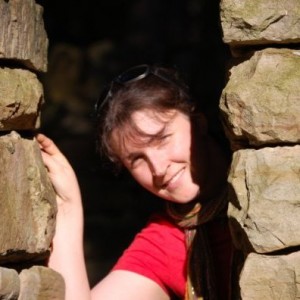
Hooykaas is a Royal Canadian Geographical Association Fellow and educator. She has the rigour of an academic, coupled with the ability to communicate in language that is accessible and engaging for people within and outside academia. Hooykaas aligns herself with alternative teaching methods, such as experiential learning, team-based learning, and service learning. Hooykaas is self-reliant, having built a cabin in the woods and guided wilderness trips across North America.
Recognition/Reconnaissance
Fellow of The Royal Canadian Geographical Society | Professional
Fellows are individuals who have distinguished themselves by directly contributing to scientific knowledge in the field of geography, geographical exploration, or allied sciences. Fellows may also be individuals who have distinguished themselves in teaching, academia, community service, and the arts and who have received major awards/official recognition, as well as individuals in the public sector, military, business and the professions who are seen as leaders in their respective fields.