

Dr. Kathleen Martin Ginis
Professor and Director, Faculty of Medicine Centre for Chronic Disease Prevention and Management, University of British Columbia
Mental health benefits of exercise | Exercise and chronic disease prevention | Exercise behaviour change | Disability |Spinal Cord Injury | Women and Exercise | Body Image | Knowledge Translation

Media
TEDx McMaster U - Dr. Kathleen Martin Ginis
"Exercising Self-Control: Rethinking Solutions to Canada's Physical Inactivity Crisis"
Partnering Researchers and Community Organizations - Dr. Kathleen Martin-Ginis
Dr. Kathleen Martin-Ginis discusses the Physical Activity Guidelines for Adults with SCI and the value of partnering researchers with community organizations, such as SCI Action Canada, to improve the quality of life for individuals with SCI. For more information about the guidelines, visit www.sciactioncanada.ca/guidelines.
Stepping on the scale daily may be key to long-term weight loss
CHCH TV, June 9, 2015Television
URL: http://www.chch.com/stepping-on-the-scale-daily-may-be-key-to-long-term-weight-loss/
Provided commentary on recent study showing benefits to daily weighing.
Keeping New Year's Resolutions on Track
CHCH TV, January 5, 2015Television
URL: http://www.chch.com/keeping-resolutions-track/
Provided commentary on factors that promote adherence to exercise resolutions.
Exercise and Alzheimer's Disease
CHCH TV, June 17, 2014Television
URL: http://www.chch.com/alzheimers-tool-kit/
Provided commentary on new toolkit developed to promote exercise to reduce risk of Alzheimer's disease.
Canada Weighs in: Pedometer Fitness Challenge
CBC The National, January 3, 2011Television
URL: http://www.cbc.ca/news/canada-weighs-in-1.1091963
Scientific consultant for this series of stories profiling Canadians trying to get fit.
CBC Quirks and Quarks, January 2, 2006Radio/Podcast
Interview with Bob MacDonald regarding results of our study of the effects of strength-training on men's and women's body image.
We need data on physical activity among people with disabilities
Hamilton Spectator, April 5, 2016Online
Op-Ed piece;t o make good policy decisions, to uphold our obligations on the UN Convention on the Rights of Persons with Disabilities, the 2017 Canadian Survey on Disability must measure physical-activity participation.
How music might improve your workouts
The New York Times, October 26, 2016Online
URL: https://www.nytimes.com/2016/10/26/well/move/how-music-might-improve-your-workouts.html?_r=0
Listening to music during a short, intense bout of exercise might change how you feel about hard workouts and encourage you to continue with the program in the future, according to a new study of intense interval training and how to make it more palatable.
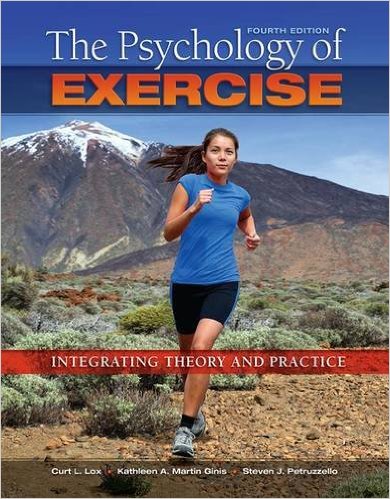
Listening to music during sprint interval exercises: The impact on exercise attitudes and intentions.
Published by Journal of Sport Sciences
September 1, 2016
This study investigated the impact of listening to music during exercise on perceived enjoyment, attitudes and intentions towards sprint interval training (SIT). Twenty men (24.8 ± 4.5 years) and women (20.1 ± 2.6 years) unfamiliar with SIT exercise completed two acute sessions of SIT, one with and one without music. Perceived enjoyment, attitudes and intentions towards SIT were measured post-exercise for each condition. Attitudes and intentions to engage in SIT were also measured at baseline and follow-up. Post-exercise attitudes mediated the effects of enjoyment on intentions in the music condition (95% confidence interval [CI]: [0.01, 0.07], κ2 = 0.36) and in the no music condition (95% CI: [0.01, 0.08], κ2 = 0.37). Attitudes towards SIT were significantly more positive following the music than no music condition (P = 0.004), while intentions towards SIT were not (P = 0.29). Further, attitudes and intentions towards SIT did not change from baseline to follow-up (Ps > 0.05). These findings revealed that participants had relatively positive attitudes and intentions towards SIT, which did not become more negative despite experiencing intense SIT protocols. This study highlights the importance of acute affective responses to SIT exercise for influencing one’s attitudes and intentions towards participating in SIT exercise. Such factors could ultimately play a key role in determining whether an individual engages in SIT exercise in the long term factors could
URL: http://www.tandfonline.com/doi/abs/10.1080/02640414.2016.1242764?journalCode=rjsp20
For a complete list of publications please refer to my CV or the link below:
Published by http://tinyurl.com/kmartinginis
March 1, 2017
I have published over 250 papers on topics related to physical activity participation in both the general population and people living with chronic conditions.
Formulation of evidence-based messages to promote the use of physical activity to prevent and manage Alzheimer’s disease
Published by BMC Public Health
February 1, 2017
Background The impending public health impact of Alzheimer’s disease is tremendous. Physical activity is a promising intervention for preventing and managing Alzheimer’s disease. However, there is a lack of evidence-based public health messaging to support this position. This paper describes the application of the Appraisal of Guidelines Research and Evaluation II (AGREE-II) principles to formulate an evidence-based message to promote physical activity for the purposes of preventing and managing Alzheimer’s disease. Methods A messaging statement was developed using the AGREE-II instrument as guidance. Methods included (a) conducting a systematic review of reviews summarizing research on physical activity to prevent and manage Alzheimer’s disease, and (b) engaging stakeholders to deliberate the evidence and formulate the messaging statement.Results The evidence base consisted of seven systematic reviews focused on Alzheimer’s disease prevention and 20 reviews focused on symptom management. Virtually all of the reviews of symptom management conflated patients with Alzheimer’s disease and patients with other dementias, and this limitation was reflected in the second part of the messaging statement. After deliberating the evidence base, an expert panel achieved consensus on the following statement: “Regular participation in physical activity is associated with a reduced risk of developing Alzheimer’s disease. Among older adults with Alzheimer’s disease and other dementias, regular physical activity can improve performance of activities of daily living and mobility, and may improve general cognition and balance.” The statement was rated favourably by a sample of older adults and physicians who treat Alzheimer’s disease patients in terms of its appropriateness, utility, and clarity. Conclusion Public health and other organizations that promote physical activity, health and well-being to older adults are encouraged to use the evidence-based statement in their programs and resources. Researchers, clinicians, people with Alzheimer’s disease and caregivers are encouraged to adopt the messaging statement and the recommendations in the companion informational resource.
URL: https://bmcpublichealth.biomedcentral.com/articles/10.1186/s12889-017-4090-5
A systematic review of review articles addressing factors related to physical activity participation among children and adults with physical disabilities
Published by Health Psychology Review
June 29, 2016
Dozens of published papers cite factors related to leisure-time physical activity (LTPA) participation among people with physical disabilities. Unfortunately, there has been little effort to synthesise this literature in a manner that is accessible and useful to the sectors (e.g., health care, recreation) responsible for LTPA promotion in disability populations. In this systematic review, over 200 factors were extracted from 22 review articles addressing barriers and facilitators to LTPA in children and adults with physical disabilities. Factors were grouped according to common themes, classified into five levels of a social ecological model, and coded according to whether they could be affected by the health-care and/or recreation sectors. Findings are discussed with regard to key factors to target in LTPA-enhancing interventions, relevant theories and models in which to frame interventions, the levels at which the interventions can be implemented, and intervention priorities. The synthesis provides a blueprint and a catalyst for researchers and practitioners to shift focus from conducting studies that merely describe LTPA barriers and facilitators, to developing and delivering strategies to increase LTPA among persons with physical disabilities.
URL: http://www.tandfonline.com/doi/full/10.1080/17437199.2016.1198240
Biography
Dr. Kathleen Martin Ginis is a Distinguished University Scholar in the Department of Medicine and the School of Health and Exercise Sciences at The University of British Columbia. Prior to 2016, she was a Professor in the Department of Kinesiology at McMaster University, where she also served as Inaugural Director of the McMaster University Physical Activity Centre of Excellence. Dr. Martin Ginis's research focuses on applying behavioural science to design, test and implement health behaviour-change interventions.
Dr. Martin Ginis is the Founding Director of The University of British Columbia, Faculty of Medicine Centre for Chronic Disease Prevention and Management. The Centre focuses on advancing health science on diabetes and obesity, cardiovascular health, and neurological disorders. She is also the Principal Investigator of the Canadian Disability Participation Project, a SSHRC-funded initiative that brings together over 50 university, public, private and government sector partners to improve physical activity, employment and mobility among Canadians with disabilities. She has published over 300 scientific papers and book chapters, and received over $13M in research funding.
Most recently, Dr. Martin Ginis partnered with the Abilities Centre in Ontario to conduct an ongoing Canada-wide survey of the impact of the COVID-19 pandemic on the health and well-being of children and adults living with disabilities.
In 2014, the Government of Ontario recognized Dr. Martin Ginis’s long-standing contributions to science that improves the lives of people with disabilities, by awarding her the Ontario Medal of Good Citizenship.
Dr. Martin Ginis resides in Kelowna, British Columbia. She is an avid runner and traveler.
Recognition/Reconnaissance
Spinal Cord Injury Ontario, John Gibbons Counsell Award | Professional
For contributions to advancing the cause of people living with spinal cord injury.
National Academy of Kinesiology, International Fellow | Professional
Elected membership honours persons who have directly or indirectly contributed significantly to the study of and/or application of the art and science of human movement and physical activity.
Ontario Medal for Good Citizenship | Professional
Awarded by the Lieutenant-Governor of the Province of Ontario, for exceptional long-term efforts and contributions to the well-being of the community. This award recognizes Dr. Martin Ginis's research and personal contributions to the spinal cord injury community.
McMaster University President's Award for Excellence in Graduate Supervision | Professional
For recognition of outstanding graduate student supervision.
Harold Yuker Research Excellence Award | Professional
Awarded by the American Psychological Association, Division 22, in recognition of best research paper published in Rehabilitation Psychology in the year 2007.
Distinguished University Scholar, University of British Columbia | Professional
The Distinguished University Scholar (DUS) program recognizes exceptional members of faculty who have distinguished themselves as scholars in research and/or teaching and learning, or who have the potential to demonstrate such leadership.
Additional Titles and Affiliations
SCI Action Canada, Founding Director
National University of Ireland, Galway, School of Engineering & Informatics, Adjunct Professor
Loughborough University, School of Sport, Exercise & Health Sciences, Adjunct/Visiting Professor
McMaster University, Department of Kinesiology, Adjunct Professor
International Collaboration on Repair Discoveries (ICORD), Scientist/Principal Investigator
Research Grants
The Canadian Disability Participation Project
Organization: Social Sciences and Humanities Research Council (SSHRC)Date: March 1, 2014
Grant amount: $2.6 Million
Details:
The CDPP is an alliance of university, public, private and government sector partners working together to enhance community participation among Canadians with physical disabilities.
More information: http://cdpp.ca
Development, evaluation & implementation of the Physiotherapists Enhancing Physical Activity Toolkit
Organization: Rick Hansen Institute and the Ontario Neurotrauma FoundationDate: May 10, 2015
Grant amount: $150,000
Details:
Project involves developing and testing an evidence-based toolkit of resources to assist physiotherapists in promoting physical activity behaviour change for clients with a spinal cord injury.
Centre for Translational Behaviour Change Research
Organization: Canada Foundation for InnovationDate: March 1, 2017
Grant amount: $600,000
Details:
Led by Kathleen Martin Ginis, professor in the School of Health and Exercise Sciences, this centre will become the site for community-engaged behaviour change research to promote health and well-being for individuals with chronic disease or physical disabilities. Initiatives include improving behavior-change interventions, developing, testing and evaluating the impact of interventions, and developing products and services for people with chronic conditions.
More information: https://news.ok.ubc.ca/2017/03/03/community-celebrates-research-at-ubc-okanagan/